Japanese Textile Arts for US Crafters in 2026: Sashiko to Shibori
Anúncios
In 2026, Japanese Textile Arts for US Crafters continue to attract interest through Sashiko stitching, Shibori resist dyeing, Boro-inspired repair, visible mending and educational programs. Their appeal combines distinctive textile techniques, historical craftsmanship, creative reuse and opportunities for contemporary interpretation.
Japanese Textile Arts for US Crafters in 2026 offer a way to explore textile techniques with deep historical roots while adapting them carefully to contemporary clothing, quilting, repair and surface design.
Sashiko, Shibori and Boro are frequently discussed together in modern craft communities, but they are not interchangeable traditions. Each developed within different historical, regional and functional contexts in Japan and deserves to be understood beyond simplified aesthetic labels.
Anúncios
For American crafters, the strongest approach is therefore to learn both technique and context, using workshops, museum collections, specialist organizations and experienced instructors to distinguish historical practice from modern interpretation.
Why Japanese Textile Techniques Continue to Interest US Crafters
Interest in Japanese textile arts in the United States is supported by longstanding craft communities, exhibitions, specialist organizations, online education and workshops focused on stitching, dyeing and textile repair.
The attraction comes partly from visual character, but also from the slower processes involved in hand stitching, resist dyeing and repairing existing textiles rather than treating every project as something that must begin with new material.
Anúncios
In 2026, these techniques remain especially relevant to crafters interested in visible mending, textile history, handwork and the relationship between traditional knowledge and contemporary design.
Sashiko: From Practical Reinforcement to Contemporary Stitching
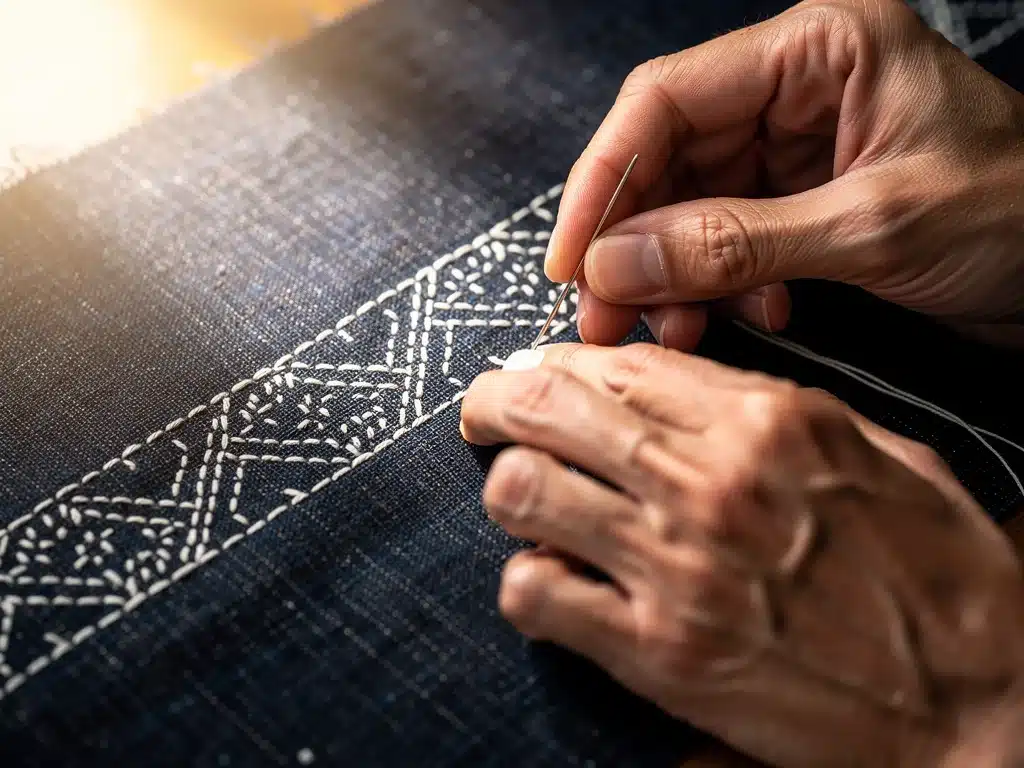
Sashiko is associated with Japanese traditions of using repeated running stitches to reinforce textiles, join layers and extend the useful life of clothing and household fabrics.
Historical examples demonstrate that the technique had a practical purpose before its decorative qualities became central to how many contemporary crafters recognize it today.
Modern Sashiko-inspired projects may emphasize pattern, repair or decoration, but understanding that functional history helps prevent the craft from being reduced to white geometric stitching on blue fabric alone.
How Traditional Sashiko Became a Modern Craft Language
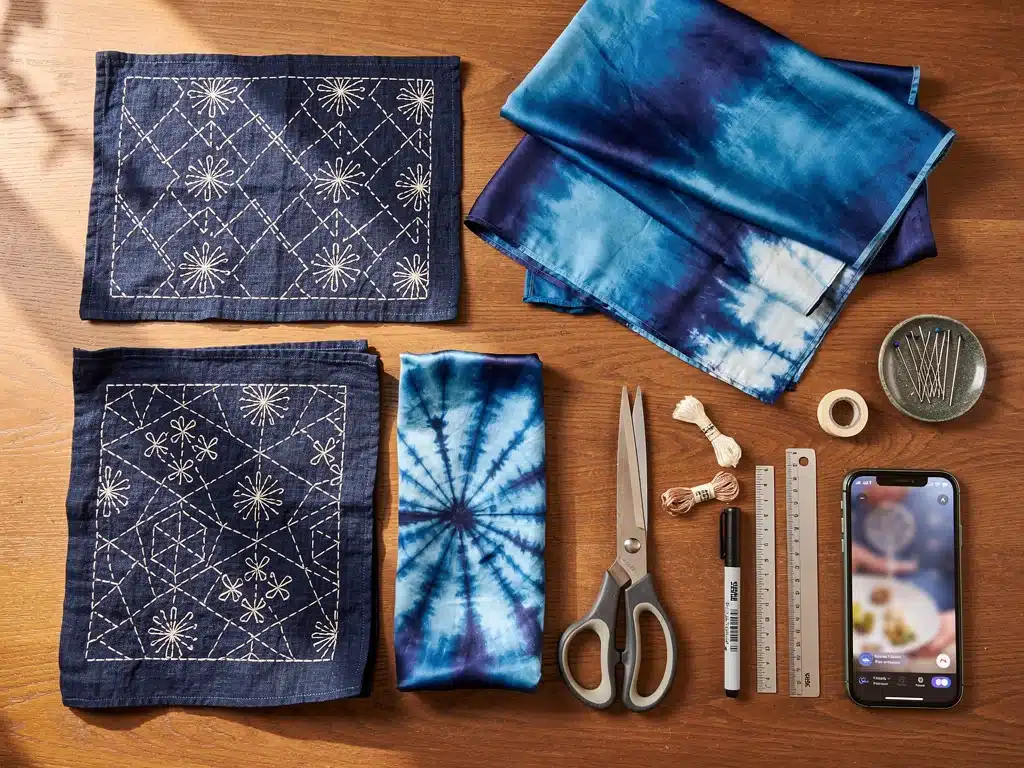
Historical Sashiko includes repeated running stitches arranged in geometric and other patterned structures, with surviving garments showing how reinforcement and decoration could coexist in one textile.
Contemporary crafters now apply related stitching approaches to denim repair, bags, quilts, jackets and decorative textiles, often experimenting with colors and fabrics that differ from historical examples.
Those adaptations can be creatively valuable as long as they are described honestly as contemporary interpretations rather than presented as exact reproductions of every traditional Japanese Sashiko practice.
- Running stitch is fundamental to many Sashiko traditions.
- Historical uses included reinforcement and extending textile life.
- Contemporary projects often expand beyond indigo and white.
- Modern visible mending may draw inspiration from Sashiko without reproducing a specific historical style.
Shibori Is More Than Japanese Tie-Dye
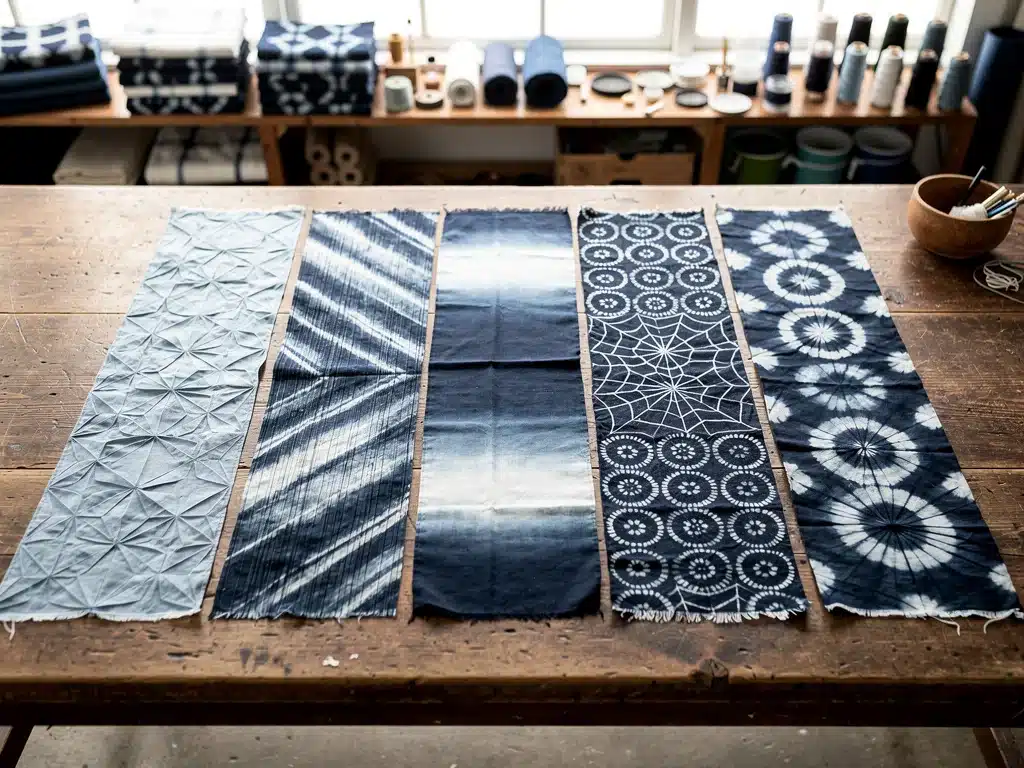
Shibori refers to a broad range of shaped resist-dyeing methods in which parts of cloth are manipulated so dye cannot penetrate them evenly.
Japanese Shibori can involve tying, stitching, folding, clamping, wrapping or compressing fabric, creating patterns through the relationship between resisted and dyed areas.
Although indigo Shibori is highly recognizable today, historical Japanese Shibori includes numerous techniques, materials and applications, so the craft should not be reduced to one color or one process.
Several Shibori Techniques Produce Very Different Results
Kanoko Shibori uses tied sections of fabric to produce repeated resisted areas, while stitched and gathered techniques can create more controlled linear or organic patterns.
Arashi Shibori involves wrapping and compressing fabric around a pole or rod, while Itajime uses boards or other forms to clamp areas of folded fabric before dyeing.
The diversity of these methods is one reason Shibori remains appealing to textile artists: a shared resist-dyeing principle can produce dramatically different visual results depending on preparation and technique.
- Kanoko uses tied resist techniques.
- Arashi involves wrapping and compressing cloth around a rod.
- Itajime uses clamping to resist dye penetration.
- Stitched Shibori techniques can create highly controlled patterns.
Boro: Understanding Repair Before Recreating the Look
Boro is commonly associated with old Japanese textiles repeatedly patched, repaired and reused over long periods, particularly garments and household cloth preserved through necessity rather than created originally as decorative patchwork.
Its contemporary visual appeal comes from layers, irregular repairs, worn fabrics and visible stitching, but treating Boro only as an aesthetic can erase the economic and social conditions that produced historical examples.
US crafters can still learn from its approach to preservation and reuse while distinguishing between historical Boro textiles and new work intentionally created in a Boro-inspired style.
How Boro-Inspired Repair Fits Contemporary Crafting
Modern makers often use worn denim, cotton scraps and visible stitching to repair garments while allowing previous damage and new patches to remain deliberately visible.
This approach can extend the life of clothing and create highly individualized textiles, making it compatible with the broader contemporary visible-mending movement.
Using the term “Boro-inspired” can be more accurate for newly constructed decorative work when the piece does not share the historical circumstances or gradual accumulation of repairs found in surviving Japanese Boro textiles.
How Sashiko and Boro Relate Without Being the Same Thing
Sashiko and Boro frequently appear together in modern craft instruction because visible running stitches can be used to secure patches and reinforce repaired fabric.
However, Sashiko describes stitching traditions and techniques, while Boro refers more broadly to textiles that accumulated layers of reuse and repair over time.
Understanding that distinction helps crafters appreciate why an old patched garment may contain Sashiko stitching without making Sashiko and Boro interchangeable terms.
Visible Mending Connects These Practices for Modern Crafters
Contemporary visible-mending workshops in the United States sometimes teach Boro- and Sashiko-inspired methods together because both can support repair that remains intentionally visible.
This teaching model is useful for practical repair, but instructors and students should still clarify which techniques come from specific Japanese traditions and which elements are modern adaptations.
That distinction allows makers to experiment creatively while preserving more accurate language about the origins and meanings of the techniques they are using.
Learning Shibori Through Historical Context
Japanese Shibori has a long history, with resist-dyeing practices documented in Japan from ancient periods and increasingly sophisticated textile applications developing over subsequent centuries.
The Kyoto National Museum describes Japanese Shibori as a group of tie-resist techniques using methods such as binding or stitching areas of cloth before dyeing so protected sections resist color.
Learning this history gives modern crafters a broader perspective than simply reproducing a pattern, because the technique belongs to a much larger textile tradition that evolved across regions and periods.
Why Historical Examples Are Valuable Learning Tools
Museum collections show how Shibori was used on garments and textiles with levels of precision and complexity that can be difficult to appreciate through simplified beginner projects alone.
They also demonstrate that Japanese resist dyeing includes luxury garments, everyday textiles and technically demanding processes rather than one uniform folk-craft aesthetic.
Studying these examples alongside practical instruction can help crafters understand both what they are reproducing and what has been adapted for modern hobby use.
Educational Opportunities Remain Accessible in 2026
US crafters can learn Japanese textile techniques through specialist organizations, independent teachers, textile guilds, workshops, museum programming and online instruction.
The World Shibori Network Foundation, based in Berkeley, California, continues to support international education and exchange around Shibori and related textile traditions, including specialist programming in 2026.
Local workshops also continue to connect Sashiko and Boro with visible mending, demonstrating that these techniques remain part of an active educational craft environment rather than merely historical museum subjects.
Choosing a Workshop or Instructor Carefully
A strong course should explain not only how to reproduce stitches or patterns but also where the techniques come from and whether the project represents traditional practice or contemporary adaptation.
Instructors with substantial study, textile experience or direct engagement with Japanese makers can often provide more useful context than tutorials that present every blue-and-white running-stitch project as traditional Sashiko.
Students should also look for courses that clearly identify materials, terminology and technique so they can continue studying independently after completing the workshop.
- Look for instructors who discuss history as well as technique.
- Distinguish traditional practice from contemporary adaptation.
- Use museums and specialist organizations as reference sources.
- Compare multiple instructional resources before treating one method as definitive.
Japanese Textile Arts and Cultural Context
Learning Japanese textile techniques can provide an entry point into Japanese culture, but cultural understanding requires more than attaching broad philosophical terms to every craft practice.
Concepts such as reuse, thrift, durability and skilled handwork are genuinely relevant to many historical textiles, but individual techniques emerged from particular communities, materials and social conditions.
Using precise historical language therefore creates a richer connection to the culture than presenting Sashiko, Shibori and Boro as interchangeable expressions of one generalized Japanese philosophy.
Avoid Oversimplifying Mottainai and Other Cultural Concepts
The concept of mottainai is frequently used in contemporary discussions of Japanese repair and reuse because it expresses regret around waste and the loss of value in something that could still be useful.
However, it should not automatically be presented as the direct historical philosophy behind every Sashiko stitch or every repaired textile unless a reliable historical source supports that specific connection.
For crafters, describing the documented practices of reinforcement, reuse and textile preservation is often more accurate than forcing one modern cultural interpretation onto every historical object.
Sustainability Claims Need More Nuance
Sashiko-inspired repair and Boro-inspired mending can support longer garment use when they genuinely repair clothing that would otherwise be discarded.
That potential sustainability benefit comes from extending the life of existing materials rather than from the Japanese origin of the technique itself.
Likewise, Shibori is not inherently environmentally sustainable because its impact depends on the fiber, dye, mordants, water use, chemicals and production process selected by the maker.
Natural Indigo Is Not Automatically Low-Impact
Natural indigo has deep historical importance within many textile traditions, but calling every naturally dyed textile environmentally superior oversimplifies questions involving cultivation, processing, water and dye-bath management.
Synthetic indigo and other modern dyes also have their own environmental considerations, meaning sustainability should be evaluated through actual material and process choices rather than a simple natural-versus-synthetic label.
For hobbyists, responsible dye use can include accurate measurement, careful disposal, efficient water use and selecting materials based on reliable information about their production.
Slow Crafting and the Value of Process
Hand stitching and resist dyeing often require significant preparation and repeated manual steps, naturally encouraging a slower pace than many industrial textile processes.
For some crafters, this makes the process itself as important as the finished object because concentration, repetition and material observation become central parts of the experience.
It is reasonable to describe this as slow crafting, but claims that Sashiko or Shibori universally produce therapeutic or mental-health benefits should be avoided without stronger evidence.
Crafting Can Encourage More Intentional Material Use
Repair-oriented projects ask makers to evaluate what already exists before purchasing replacement materials, encouraging attention to fabric condition, construction and potential reuse.
Shibori and decorative Sashiko can also encourage deeper engagement with cloth because the maker spends considerable time manipulating, stitching or dyeing one piece.
This does not make every handmade project sustainable by default, but it can support a more intentional relationship with materials when the process emphasizes durability and continued use.
Contemporary Artists Continue to Reinterpret Traditional Techniques
Japanese textile traditions are not static museum practices, and contemporary artists continue to reinterpret historical techniques through art, clothing, installation and experimental textile design.
The World Shibori Network itself developed around international exchange and the preservation and evolution of shaped resist-dyeing knowledge, demonstrating how traditional practice can coexist with innovation.
US crafters can participate in this creative dialogue while remaining clear about when they are studying a traditional technique and when they are producing contemporary work inspired by it.
Cross-Cultural Collaboration Works Best With Clear Attribution
Collaboration between makers from different backgrounds can generate new textile approaches, but accurate attribution helps ensure that innovation does not erase the cultural origin of techniques being borrowed.
A denim jacket with Sashiko-inspired stitching or a contemporary Shibori installation can be both creative and respectful when its influences are acknowledged clearly.
This distinction also helps audiences understand that adaptation is part of living craft practice rather than evidence that every modern interpretation is historically traditional.
- Use precise terminology for techniques.
- Credit Japanese sources and teachers when appropriate.
- Distinguish historical reconstruction from contemporary interpretation.
- Explore innovation without erasing cultural context.
Materials for Beginning Sashiko and Shibori
Beginners do not always need specialized or expensive materials to start learning, although traditional tools can make certain techniques easier to understand and reproduce.
Sashiko projects commonly use suitable woven fabric, strong cotton thread and a long needle appropriate for repeated running stitches, while Shibori projects require fabric compatible with the chosen dye and resist technique.
Material selection should follow the specific project rather than a universal shopping list because different Sashiko traditions and Shibori methods may require different fabrics, needles, threads or dye processes.
Choosing Sashiko Materials
Traditional-looking beginner projects often use indigo or dark cotton with contrasting thread because the stitches are easy to see, but blue fabric and white thread are not mandatory for contemporary practice.
A suitable needle should comfortably pass through the chosen fabric and support the multiple running stitches commonly loaded onto the needle during Sashiko work.
Beginners can benefit from practicing on stable woven cotton before attempting heavy denim, layered repairs or more technically demanding historical patterns.
Choosing Shibori Materials
Natural fibers such as cotton and silk are frequently used in Shibori, but dye selection must match the fiber because different dye classes require different preparation and processing.
The resist method also affects material choice, since stitching, binding, folding and clamping place different mechanical stresses on the cloth before it enters the dye bath.
Beginners should follow a complete dye recipe from a reliable source rather than combining techniques and chemicals independently without understanding compatibility and safe handling.
Finding Reliable Resources for Japanese Textile Arts
Reliable learning resources include museums, organizations dedicated to textile preservation, specialist teachers, established craft publications and workshops that provide clear sourcing for historical information.
Museum collections are particularly valuable because they allow crafters to compare contemporary tutorials with actual historical garments and textiles rather than assuming every online example represents traditional practice accurately.
Specialist networks can also provide access to lectures, tours and instructors whose work connects craft practice with historical study and living Japanese textile communities.
Balancing Online Learning With Direct Study
Online instruction makes Sashiko, Shibori and visible mending accessible to people who do not live near textile schools or specialist cultural institutions.
However, video tutorials often simplify techniques for beginners, so more advanced learners should supplement them with books, museum collections, workshops and specialist research.
Combining accessible digital instruction with reliable historical references provides a stronger foundation than treating social-media terminology as authoritative textile history.
| Textile Practice | Key Context for US Crafters |
|---|---|
| Sashiko | Running-stitch traditions historically associated with reinforcement, quilting, repair and decorative textile work. |
| Shibori | A broad family of shaped resist-dyeing techniques using tying, stitching, wrapping, folding or clamping. |
| Boro | Historical textiles characterized by repeated repair and reuse; modern projects are often more accurately described as Boro-inspired. |
| Learning in 2026 | Workshops, specialist organizations, museums and online resources continue to make these techniques accessible to US crafters. |
Frequently Asked Questions About Japanese Textile Arts for US Crafters
Sashiko stitching and basic Shibori resist dyeing can provide accessible starting points, while Boro-inspired visible mending can introduce crafters to repair and reuse. Each should still be studied within its own historical context.
No. Sashiko refers to stitching traditions and techniques, while Boro describes textiles shaped by repeated repair and reuse over time. Historical Boro pieces may contain Sashiko stitching, but the terms are not interchangeable.
No. Indigo is strongly associated with many recognizable Shibori textiles, but Shibori describes the resist method rather than one specific dye color or material.
Not automatically. Repair and reuse can extend textile life, but environmental impact depends on materials, dyes, water, chemicals, production methods and whether the craft actually replaces new consumption.
Museums, textile guilds, specialist organizations, experienced instructors and online courses all provide learning opportunities. Resources that combine technique with cultural and historical context are especially valuable.
Looking Ahead for Japanese Textile Arts in the United States
Interest in Japanese Textile Arts for US Crafters in 2026 is best understood as part of an established international textile community rather than an unverified sudden national boom.
Sashiko, Shibori and Boro continue to offer rich opportunities for stitching, dyeing, repair and creative reuse, while museums and specialist networks provide essential context for distinguishing historical practice from contemporary interpretation.
The strongest future for these crafts in the United States will come from combining experimentation with accurate attribution, careful study and respect for the Japanese textile traditions from which these techniques emerged.